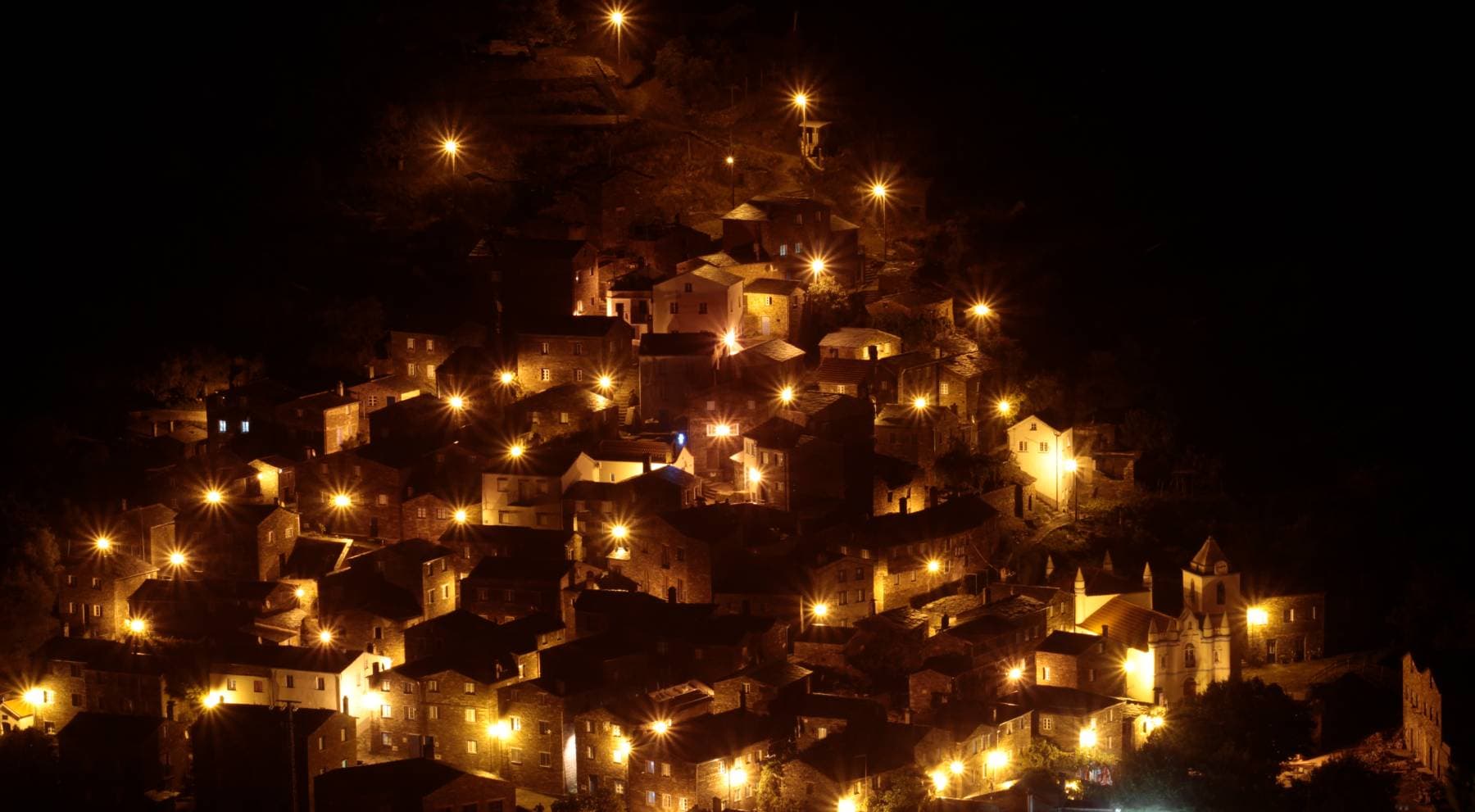
Piódão
Piódão, a schist-built village nestled in the Serra do Açor, showcases remarkable harmony between architecture and rugged mountain terrain. Declared an Asset of Public Interest in 1978 and progressing toward National Monument status, it preserves traditional construction and cultural identity. Its picturesque, nativity-scene appearance and surrounding landscapes attract visitors worldwide. With deep agricultural roots, Piódão is part of the “Farm-to-Fork Ecosystem-based Management” project, promoting biodiversity, native species, sustainable farming and water-efficient levada systems across the Historic Villages network. Today, improved accessibility and free public Wi-Fi support both residents and visitors, enhancing the village’s sustainable future.
Community characteristics
Nestled on the slopes of the Serra do Açor, this historic village built of schist is a symbol of harmonious adaptation to the challenges of the terrain. Declared an Asset of Public Interest in 1978, it is now in the process of being declared a National Monument, with the aim of preserving, protecting and disseminating traditional building techniques. Its nativity scene architecture and surrounding landscape have proved to be attractive features for tourists from all over the world. Because of its ancestral and current connection to the land, Aldeias Históricas de Portugal, in partnership with the Municipality, Parish Council and community, designed a project related to the farm to fork domain of the Green Deal, in close connection with the Mediterranean Diet of Portugal, recognised as UNESCO Intangible Cultural Heritage of Humanity on 4 December 2013 in Baku, Azerbaijan.
Community strengths and smartness
The project, entitled 'AHP Network | Farm-to-Fork Ecosystem-based Management', has a transversal nature in the 12 historic villages that make up the network (survey and mapping of native species), as it plans to experiment with the scientific and technological system for the protection and conservation of terraces and the introduction of native species as a means of restoring biodiversity, The use of traditional agricultural techniques, the promotion of sustainable production and consumption, the use of the levada system (communal irrigation system) as part of the process of water efficiency, among other added value in the context of sustainability. This project has been submitted for funding and the outcome is awaited. The Historic Village of Piódão has a wireless network for free use in public spaces and has developed actions in the field of physical and digital accessibility, two networking projects promoted by the AHP-ADT with the 10 municipalities that make part of the Historic Villages of Portugal Network.
Some content is available for members only.
Join the network to access all resources and insights.
Latest members
Contact Smart Village Network about Piódão
Have a question about Piódão or the information shown on this page? Send us a message and Smart Village Network will review it.